


Learn how to mix and match jewelry with a focal piece, mixed metals, layering and balance. Practical styling steps for every outfit and piercing.
How to Mix and Match Jewelry Without It Looking Messy?
Nov 18, 2026

Quick Summary
To mix and match jewelry without it looking messy, start with one focal piece, such as a bold necklace or cuff, and build everything else around it. Choose a dominant metal and add the second in small amounts. Keep supporting pieces smaller or simpler so the focal piece leads.
- Pick one focal piece first; it should be the largest or most colorful item you wear.
- Choose a dominant metal and use the second metal in one or two pieces only.
- Connect mixed metals with one shared element, such as a repeated shape or stone color.
- Layer necklaces at least an inch apart in length, starting with the longest chain.
- If the look feels off, remove one piece; fewer well-chosen pieces look better.
Ready to mix and match with confidence?Denise Pacini makes lightweight, statement jewelry designed to be layered and styled your way.
Celine Colorful CZ Baguette Tennis Necklace
Table of Contents
- Start With a Focal Piece Before Anything Else
- How to Mix Silver and Gold Jewelry Together
- How to Wear Mixed Metal Jewelry Across Your Body
- Layering Necklaces, Stacking Bracelets and Rings
- How to Mix and Match Jewelry Silver and Gold Bracelets
- Matching Jewelry to Your Skin Tone, Outfits and Comfort
- Pick One Unifying Element and Build Your Next Look
- Frequently Asked Questions
Start With a Focal Piece Before Anything Else
Last Updated: November 17, 2026
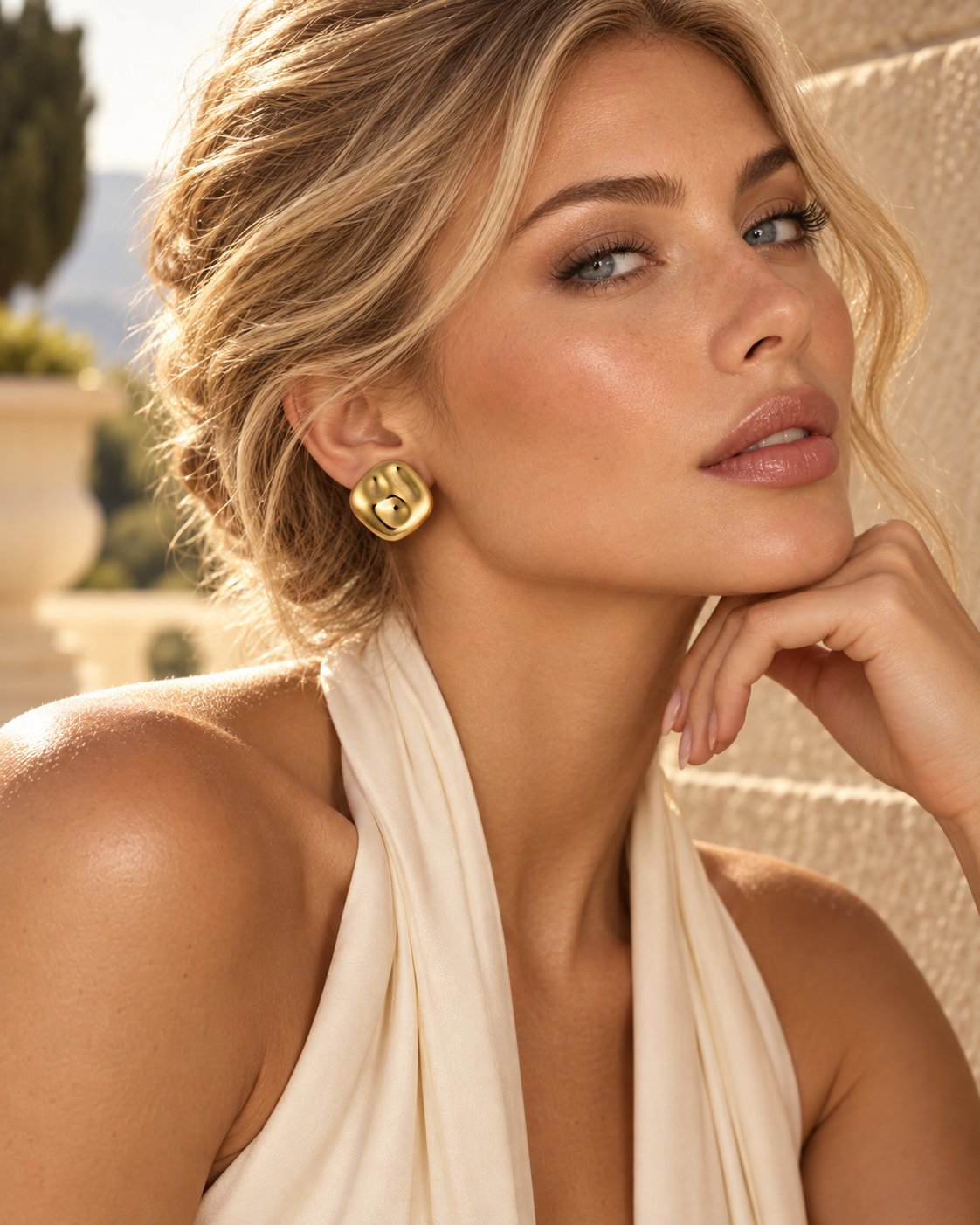
Mixing jewelry looks effortless on the people who do it well, but most messy looks come from one mistake: wearing too many pieces that all want attention. The fix is simpler than most guides suggest. Pick one focal piece first, then build everything else around it. Statement pieces work best with this approach, so the rest of your jewelry can stay quiet and let the bold piece lead.
A focal piece is the one item that gets noticed first. It might be a chunky cuff, a sculptural bangle, or a bold tennis necklace with colorful stones. Once you know what your focal piece is, every other choice becomes easier. You are no longer guessing. You are supporting one idea.
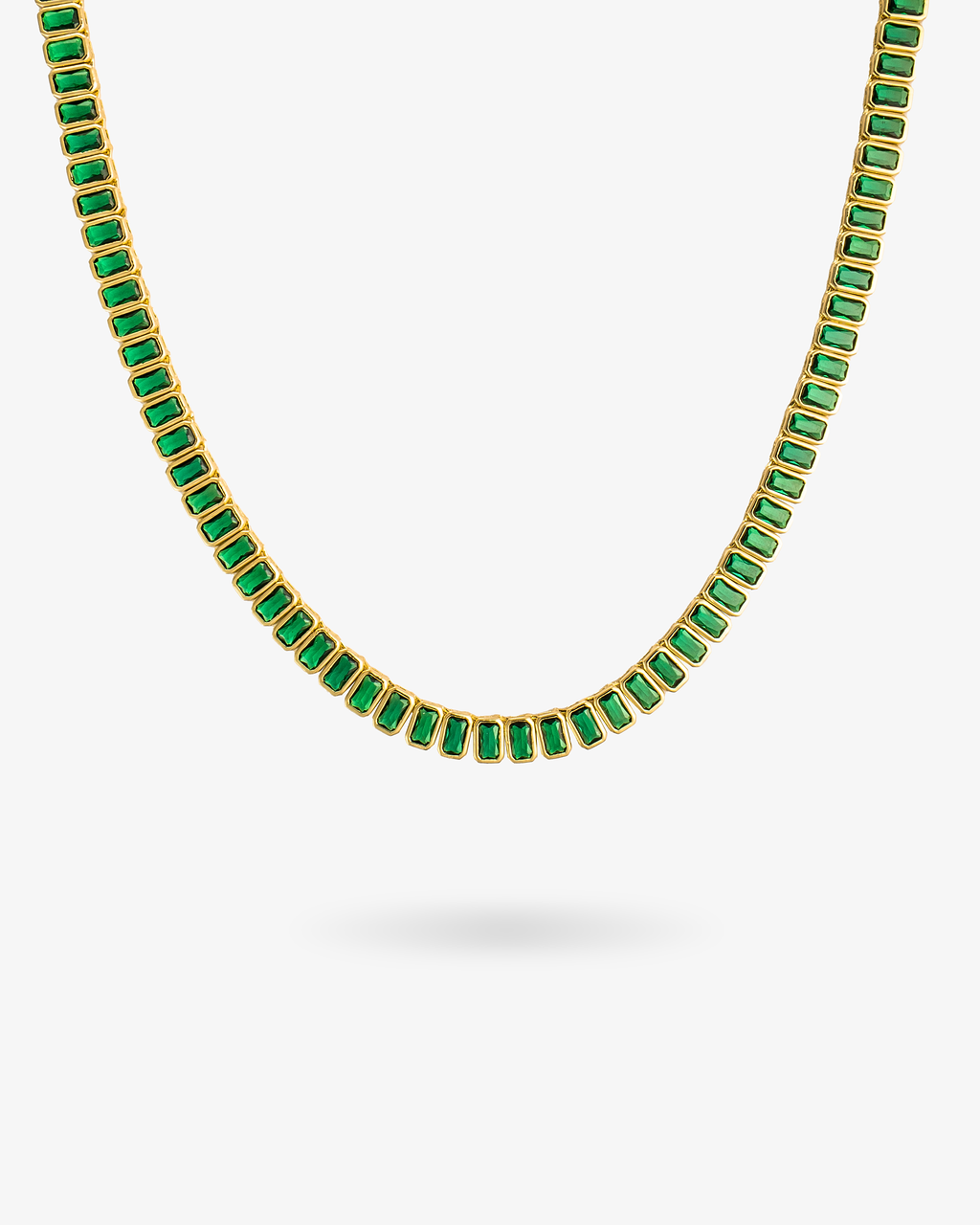
Start with the piece you already love. Ask yourself a few quick questions:
- Is it the largest or most colorful piece I'm wearing?
- Would I notice it first across a room?
- Does it match the mood of my outfit?
If the answers are yes, you have your focal point. Everything else should be smaller, simpler, or repeat one detail from it.
Watch out: Two statement pieces competing at the same time usually look busy, not bold. If you want two big pieces, make one clearly larger or more colorful than the other.
How to Mix Silver and Gold Jewelry Together
Can you mix silver and gold jewelry together? Yes. Mixing metals is one of the easiest ways to make jewelry look modern and personal. The trick is to choose a dominant metal and let the second one play a supporting role.
Here is a simple method that works for most people:
- Pick a main metal. Choose gold or silver as your base. This is usually the metal in your focal piece.
- Add the second metal in small amounts. One or two pieces in the other metal is usually enough.
- Connect the metals with one shared element. Repeat a shape, a stone color, or a similar finish.
- Check the balance. If the room looks split evenly, change one piece to tip the ratio.
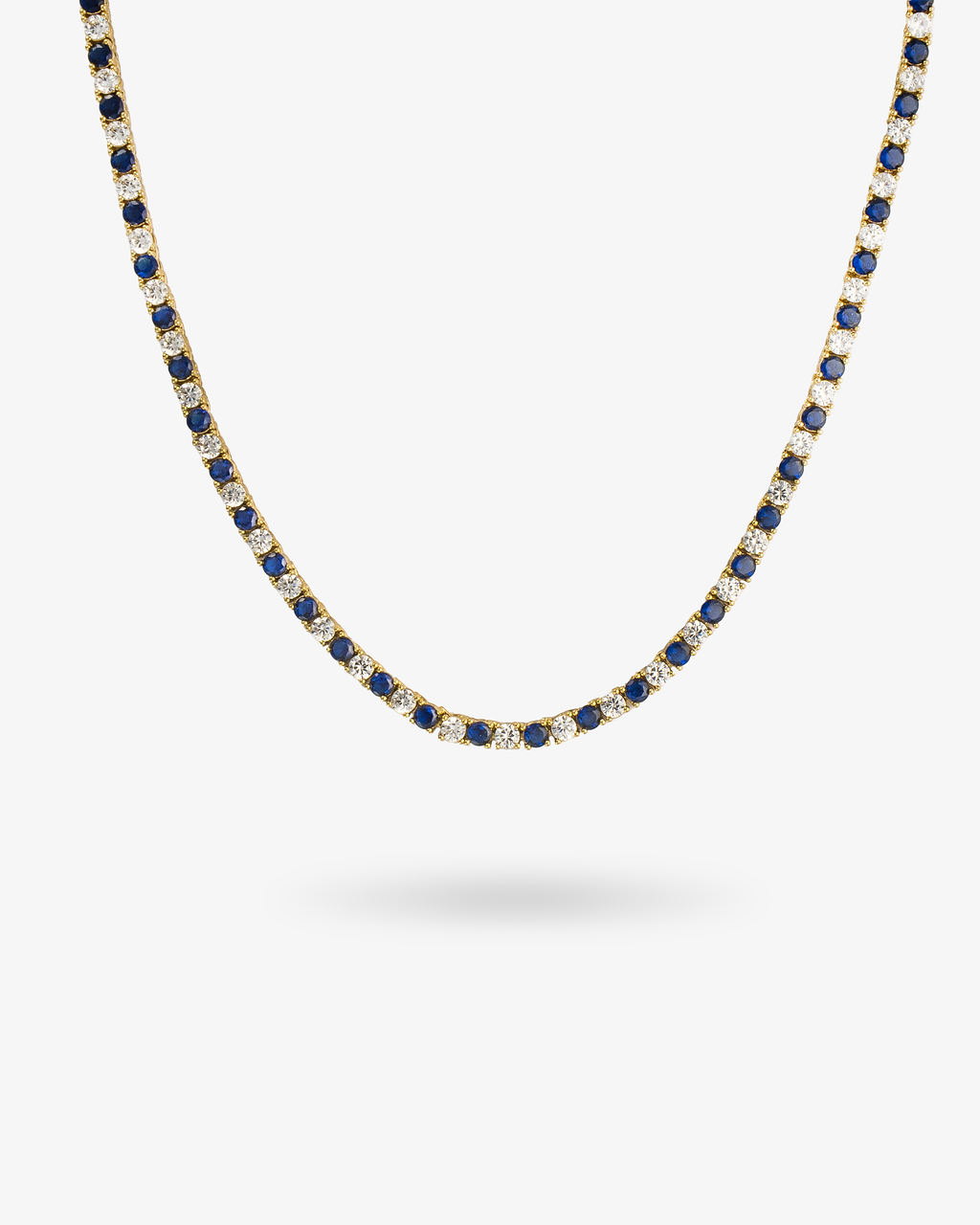
A good example: wear a gold tennis necklace as your focal piece, then add a thin silver bracelet and a silver ring. The gold leads, and the silver adds contrast without competing.
Skin tone also plays a role. Many people find gold flatters warm undertones and silver flatters cool undertones, but both can work with any skin tone. Trust what looks good in the mirror.
How to Wear Mixed Metal Jewelry Across Your Body
Mixing metals works best when you spread the pieces across different areas, such as your ears, neck, wrists, and fingers. This gives each metal its own space, so nothing looks cluttered.
Here is how to map it out:
- Ears: Choose one metal for your main earrings.
- Neck: Pick the metal for your focal necklace.
- Wrists: Mix a bracelet in the second metal with a watch in the first.
- Fingers: Use one or two rings to finish the look.
Using a different metal in each area can look intentional. Keeping every piece in one zone, such as all silver on the neck and all gold on the wrist, can make the look feel more planned.
Here is a quick summary of how to place your metals:
| Body Area | Best Use | Tip |
|---|---|---|
| Ears | Main metal or focal earrings | Keep them the same metal as your necklace |
| Neck | Focal necklace | Let this set the metal tone |
| Wrists | Bracelet or watch | Add the second metal here |
| Fingers | One or two rings | Use the second metal as an accent |
Watch out: Wearing both metals in every single spot can look random. Give each metal at least one clear area to stand out.
Layering Necklaces, Stacking Bracelets and Rings
Layering is where many people feel most nervous, but a few rules make it easier. Start with your longest necklace and work toward the shortest. This keeps each chain visible and prevents tangling.
Some simple layering ideas:
- A tennis necklace over a fine chain. The tennis piece leads, and the thin chain adds softness.
- Two chains of different lengths. Choose lengths that are at least an inch apart so they do not bunch together.
- Stacked rings on one hand. Mix thin bands with one statement ring.
Bracelets stack well when they share a theme. You can stack a bangle with a thin chain bracelet, or pair a textured cuff with a smooth band. A common mistake is stacking too many bracelets of similar width. Vary the widths so the stack looks layered, not flat.
The Celine Colorful CZ Baguette Tennis Necklace ($225.00) can be worn on its own, or with a delicate minimalist chain beneath it for a contemporary look. The Marcella Gold Tennis Necklace with Colored Stones ($225.00) has a 3mm profile and pairs the same way.
How to Mix and Match Jewelry Silver and Gold Bracelets
Silver and gold bracelets can look great together, but they need the right setup. The easiest approach is to keep one bracelet as the focal point and use the other as a support.
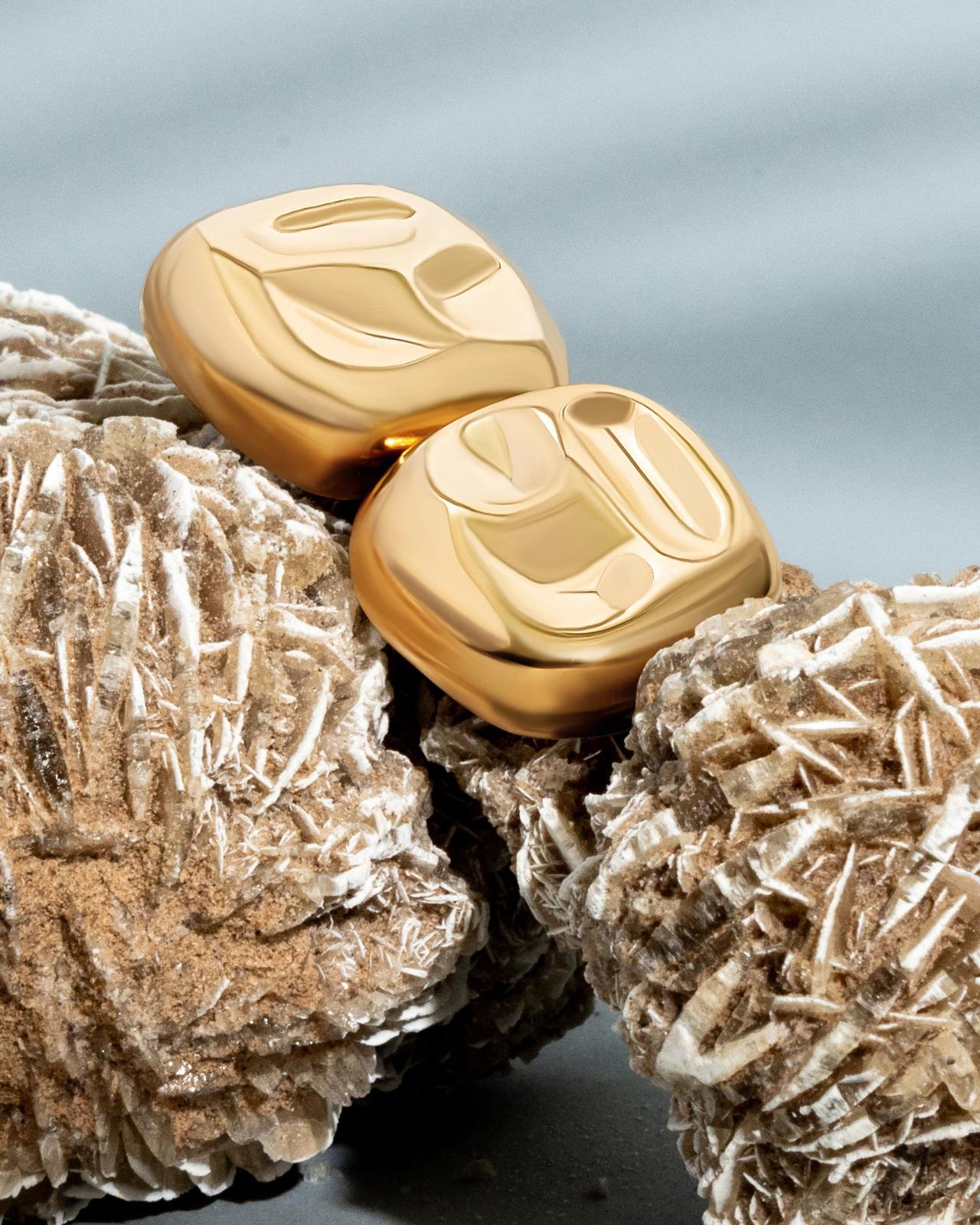
Try these combinations:
- A gold bangle with two thin silver chain bracelets
- A silver cuff with a single gold bracelet on the other wrist
- A stack of mixed metal bands with one larger statement piece in the middle
- A wide textured cuff in one metal paired with a smooth band in the other, so the contrast is in texture as well as color
The Alma Textured Statement Bangle Bracelet ($145.00) is a focal piece. It comes in gold or rhodium, so you can pick the metal that matches your rings and necklace.
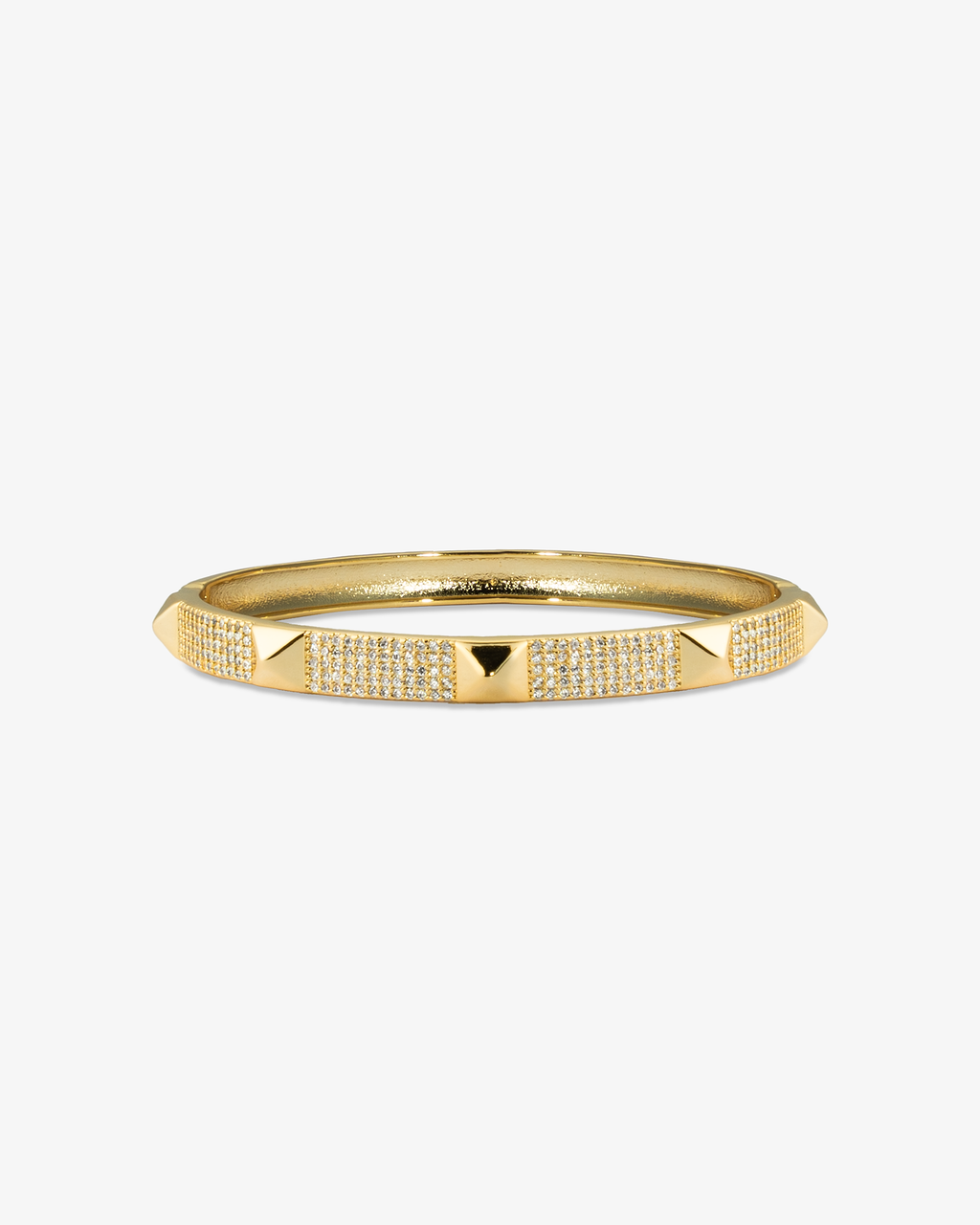
Watch the widths. A wide bangle with a very thin chain can look lopsided, so add a second bracelet of medium width if the stack feels uneven.
Watch the finishes. Mixing a high-polish piece with a brushed or hammered piece adds depth, but three high-shine pieces in two metals can look flat. Let one piece carry the shine and keep the others matte or textured.
Watch the fit. Bracelets that are too loose slide over the hand and tangle; ones that are too tight leave marks. Aim for a stack that sits just above the wrist bone and can move slightly without slipping off.
Extend beyond metal. The same balance rules apply when you add non-metal materials.
Care for mixed stacks. Plated bracelets wear fastest where they rub against harder metals, so avoid placing a plated piece directly against a steel watch.
Matching Jewelry to Your Skin Tone, Outfits and Comfort
Jewelry should suit your skin, your clothes, and your day. The most useful way to apply mixing rules is to work through real outfits and real wear conditions, not abstract color theory. Here is how to do that.
Skin tone and metal choice. Many people find gold flatters warm undertones (golden, peachy, or olive) and silver flatters cool undertones (pink, red, or bluish), while neutral undertones can wear both easily. Treat this as a starting point, not a rule.
Outfit-by-outfit examples. General advice is hard to apply until you see it on a full look. These four combinations show how the same principles shift with the setting:
- Casual (weekend, errands): a thin gold chain, a silver chain layered one inch longer, two thin silver rings, and a single gold bangle. The mixed metals read as relaxed because the pieces are small and the ratio is roughly even.
- Work (office, meetings): one focal piece, a structured gold tennis necklace or a bold cuff, plus small gold studs and a thin gold ring. Keep the second metal to one accent, such as a silver watch, so the look stays polished.
- Formal (dinner, event): a statement necklace in your main metal, matching earrings, and one bracelet in the second metal. Let the focal piece carry the color and size; supporting pieces stay fine and quiet.
- Evening (party, night out): stack two or three bracelets in mixed metals, add a statement ring, and keep the neckline simpler so the wrist and hand do the talking. Evening looks tolerate a higher piece count because the lighting and setting make bold combinations feel intentional.
Comfort and practical wear. Lightweight jewelry is generally easier to wear for long hours, and the details matter.
Care when combining metals and materials. Mixed-metal and mixed-material pieces wear differently, and a little care keeps them looking intentional. Plated pieces can lose their finish where they rub against harder metals, so avoid stacking a plated bracelet directly against a steel watch.
Budget and personal style. You do not need a full overhaul to mix well. Start with the pieces you already own, add one accent metal in a small piece, and build from there. The goal is a look that feels like you, not a rulebook.
Pick One Unifying Element and Build Your Next Look
A unifying element is one detail that ties your pieces together. It can be a shared stone color, a repeated shape, or a single metal. When your jewelry shares one thread, even bold combinations look intentional.
Try one of these unifying ideas:
- Stone color: Choose pieces with a shared color, such as green or blue stones.
- Shape: Repeat curves, rounded edges, or geometric lines.
- Metal: Use one metal for most pieces and one accent metal for a small detail.
Here is a simple way to build your next look:
- Choose your focal piece.
- Select one unifying element.
- Add two or three supporting pieces that repeat that element.
- Step back and check the balance.
If something feels off, remove one piece. Fewer, well-chosen pieces almost always look better than a crowded stack.
Mixing jewelry is about confidence and balance, not rules. Start with one focal piece, keep your metals intentional, and let your personal style lead. You can explore our full collection at Denise Pacini to find pieces that fit how you want to wear them.
BUTTON: Shop Mix and Match Jewelry
Frequently Asked Questions
Can you wear silver and gold jewelry together?
Yes. Mixing silver and gold is a common styling choice and works well when you follow a simple rule: pick one metal as the dominant tone and use the other as an accent. A common guide is a 2:1:1 ratio, with two pieces in the dominant metal and one each in the secondary metal and a neutral. Keep the shapes or finishes consistent, such as polished pieces with polished pieces, so the combination looks intentional rather than accidental.
Why do people say not to mix gold and silver?
The old rule came from a time when metals were far more fixed in their roles. Today, the mistake people actually make is mixing metals with no shared thread, such as a heavy chunky gold bracelet beside a fine silver chain with a very different finish. When the pieces share a shape, a finish or a stone color, the metals read as deliberate. If you want a cohesive look, let one element connect the pieces, like a matching polish or similar curves.
How do you mix and match jewelry metals without clashing?
Start by choosing a focal piece, such as the Marcella Gold Tennis Necklace with Colored Stones at $225.00, then add supporting pieces in the same metal or a complementary one. Keep the number of metal tones to two. Balance the proportions so one piece is clearly larger or bolder than the others. Repeating a shared detail, such as the same stone color or a similar curved line, helps the mix look planned.
How do you wear mixed metal jewelry comfortably all day?
Choose lightweight pieces for areas you wear all day, especially earrings and rings. Denise Pacini's pieces are made with lead and nickel free materials and are hypoallergenic. Check the measurements before you buy: the Alma Textured Statement Bangle Bracelet has a 6 3/4 inch diameter and 5 mm thickness, so it sits differently than a slim cuff.
